Manhwa and the Reshaping of Global Comics Culture
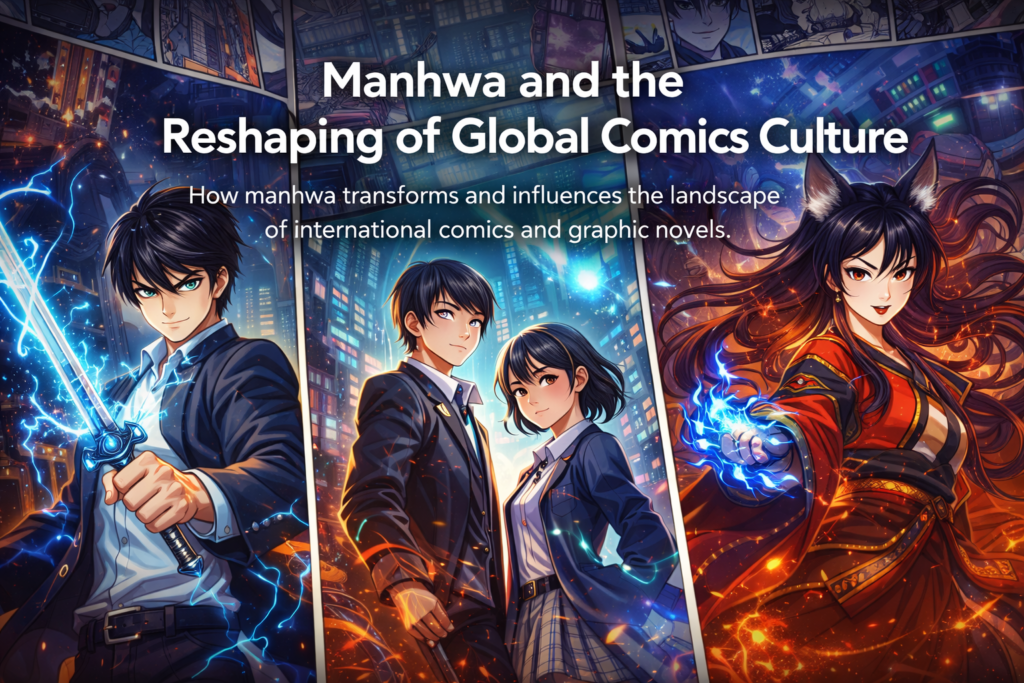
Manhwa has emerged as one of the most transformative forces in contemporary visual storytelling. Originating in South Korea, it has evolved far beyond its regional roots, positioning itself as a central pillar of the global comics ecosystem. This rise is not driven by novelty alone, but by a convergence of narrative innovation, digital fluency, and cultural adaptability that few mediums have achieved with such consistency.
At a structural level, manhwa aligns seamlessly with modern consumption habits. Designed predominantly for digital platforms, its vertical-scroll format reimagines how stories are read and perceived. Panels flow downward with deliberate rhythm, replacing rigid page turns with a continuous visual descent. This creates a sense of momentum. A sense of inevitability. Readers are pulled forward, often without realizing how much time has passed.
Narrative Elasticity and Thematic Range
One of manhwa’s defining strengths lies in its narrative elasticity. Genres are not treated as fixed containers but as malleable frameworks. Fantasy blends with political intrigue. Romance intersects with psychological horror. Slice-of-life moments coexist alongside cosmic-scale conflicts. This hybridity allows stories to feel expansive yet intimate.
Characters, too, are crafted with unusual dimensionality. Protagonists are frequently morally ambiguous, shaped by systemic pressures rather than pure destiny. Antagonists are rarely caricatures; they are products of social hierarchies, economic disparity, or emotional erosion. Such narrative construction fosters empathy, even when actions are ethically fractured.
This depth plays a significant role in explaining Why Manhwa Is Taking Over Global Comics. Readers are no longer passive observers. They are participants in layered emotional architectures that reward sustained engagement.
Visual Language and Aesthetic Precision
Visually, manhwa employs a refined yet expressive aesthetic vocabulary. Clean line work is paired with controlled color palettes that shift subtly to reflect mood and tension. Negative space is used strategically, allowing silence to communicate as powerfully as dialogue. Action sequences unfold with kinetic clarity, while quieter moments linger through elongated frames and restrained motion.
The vertical format amplifies these effects. A single falling figure can occupy multiple screens, elongating time and heightening dramatic impact. Climactic reveals are often placed at scroll thresholds, turning the simple act of swiping into a narrative device.
This meticulous orchestration of form and function elevates manhwa beyond illustration. It becomes visual dramaturgy.
Digital Ecosystems and Global Accessibility
Manhwa’s ascent is inseparable from the digital ecosystems that sustain it. Web-based platforms have democratized access for both creators and audiences. Geographic boundaries dissolve. Translation pipelines accelerate. New releases reach global readers almost instantaneously.
Monetization models also differ from traditional print comics. Episodic releases, microtransactions, and subscription systems allow creators to maintain financial viability while responding dynamically to audience feedback. This creates an iterative relationship between storyteller and reader, one that feels organic rather than transactional.
Such accessibility fuels discoverability. A reader in one hemisphere can stumble upon a niche title, share it instantly, and ignite international interest within hours. Virality becomes a structural advantage rather than an afterthought.
Cultural Resonance Without Dilution
Despite its global reach, manhwa retains a distinct cultural texture. Social dynamics, educational pressures, workplace hierarchies, and familial expectations are often embedded within narratives, offering authentic glimpses into Korean societal frameworks. Yet these elements are never alienating. Instead, they resonate universally, reflecting shared human anxieties in culturally specific forms.
This balance between cultural specificity and global relatability is rare. It allows manhwa to expand without dilution, preserving its identity while remaining accessible to diverse audiences.
Again, this equilibrium reinforces Why Manhwa Is Taking Over Global Comics. It does not homogenize itself to appeal broadly. It trusts readers to engage with difference.
Influence on the Future of Visual Storytelling
Manhwa’s influence now extends beyond its own medium. Its storytelling techniques are informing animation, live-action adaptations, and even interactive media. Concepts such as vertical pacing, episodic cliff design, and emotionally driven world-building are being adopted across industries.
More importantly, manhwa has recalibrated reader expectations. Audiences now seek stories that are visually fluid, emotionally complex, and structurally innovative. Traditional comics, webtoons, and graphic novels alike are responding to this shift, often borrowing liberally from manhwa’s design philosophy.
Conclusion
Manhwa is not a transient trend. It is a structural evolution within global comics culture. Through digital-native design, narrative sophistication, and cultural authenticity, it has redefined what serialized visual storytelling can achieve in the modern era.
The question is no longer whether manhwa belongs on the global stage. The question has already been answered by its readers. The real inquiry now is how far its influence will reach—and how profoundly it will continue to reshape the language of comics worldwide.