comic culture
Manhwa and Manga in a Global Context
Manhwa and manga are often mentioned in the same breath, grouped together as pillars of East Asian sequential art. Yet beneath this superficial proximity lies a complex divergence in structure, aesthetics, and narrative philosophy. Understanding these distinctions reveals not competition, but contrast. It also clarifies Manhwa vs Manga What Sets Them Apart in a rapidly globalizing comics ecosystem.
Both forms share historical intersections with print culture and visual storytelling traditions. However, their modern expressions reflect different creative priorities shaped by technology, readership habits, and cultural frameworks.
Origins and Cultural Frameworks
Manga developed within Japan’s postwar publishing boom, deeply rooted in serialized print magazines. Its evolution was shaped by rigid publication schedules, black-and-white printing economics, and genre segmentation aimed at specific demographic cohorts. These constraints fostered remarkable efficiency in storytelling, emphasizing clarity, symbolism, and visual economy.
Manhwa, originating in South Korea, followed a more turbulent trajectory. Subject to censorship during much …
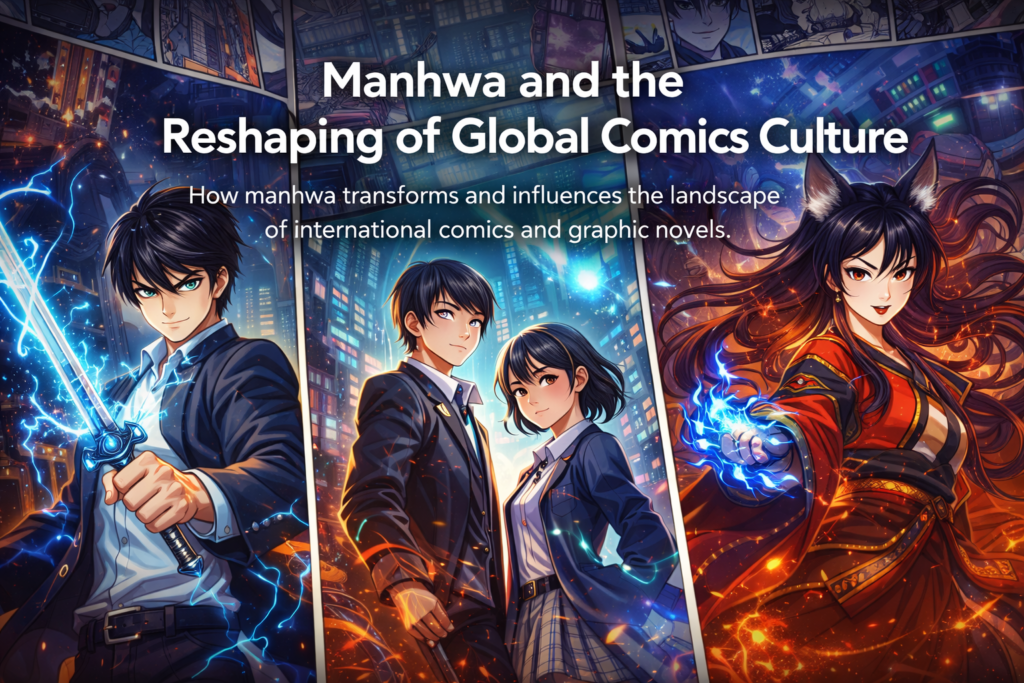
Manhwa and the Reshaping of Global Comics Culture

Manhwa has emerged as one of the most transformative forces in contemporary visual storytelling. Originating in South Korea, it has evolved far beyond its regional roots, positioning itself as a central pillar of the global comics ecosystem. This rise is not driven by novelty alone, but by a convergence of narrative innovation, digital fluency, and cultural adaptability that few mediums have achieved with such consistency.
At a structural level, manhwa aligns seamlessly with modern consumption habits. Designed predominantly for digital platforms, its vertical-scroll format reimagines how stories are read and perceived. Panels flow downward with deliberate rhythm, replacing rigid page turns with a continuous visual descent. This creates a sense of momentum. A sense of inevitability. Readers are pulled forward, often without realizing how much time has passed.
Narrative Elasticity and Thematic Range
One of manhwa’s defining strengths lies in its narrative elasticity. Genres are not treated as fixed containers …
The Enduring Relevance of Comics in a Connected World
Comic books have survived wars, censorship, technological revolutions, and shifting cultural tastes. Many predicted their decline with the rise of television, video games, and digital media. Yet comics persist. Not quietly, but confidently. To understand Why Comics Still Matter in the Digital Age, it is necessary to examine how this medium continues to evolve while preserving its core narrative power.
Comics as a Unique Narrative Medium
Comics occupy a rare intersection between literature and visual art. They are not merely illustrated stories. They are sequential experiences. Meaning is created not only through dialogue and imagery, but through pacing, layout, and the silent spaces between panels.
This structure invites active participation. Readers do not passively consume comics; they interpret them. The mind bridges gaps, imagines motion, and supplies emotional resonance. In an era dominated by autoplay videos and algorithm-driven feeds, this participatory quality gives comics a distinctive cognitive and artistic …