Manhwa and the Evolution of Narrative Form

Manhwa has emerged as a transformative force within contemporary visual culture, reshaping how stories are structured, delivered, and emotionally experienced. Once perceived as a regional medium, it now operates at the forefront of narrative innovation. Its influence extends beyond comics, affecting animation, streaming adaptations, and even interactive media. This shift offers a compelling lens into How Manhwa Changed Modern Storytelling.

The change did not occur abruptly. It was the result of gradual experimentation, technological alignment, and a willingness to challenge inherited narrative conventions.

Digital-First Story Architecture

One of the most profound changes introduced by manhwa lies in its digital-first architecture. Traditional page-based storytelling relies on spatial limitation. Manhwa dissolves this boundary. Vertical scrolling enables narratives to unfold continuously, unrestrained by page count or panel grids.

This structural freedom alters pacing at a fundamental level. Moments can stretch across screens. Silence becomes palpable. Emotional beats are elongated through visual descent …

» Read more
Manhwa and the Digital Renaissance of Visual Storytelling

Manhwa has undergone a remarkable transformation over the past two decades, shifting from a nationally consumed medium into a global cultural export. This evolution did not occur in isolation. It was catalyzed by technological change, shifting reader behaviors, and the emergence of digital platforms that redefined how stories are created and consumed. Together, these forces explain The Rise of Manhwa in the Digital Age and its growing dominance within contemporary comics culture.

Unlike traditional print-bound comics, manhwa adapted early to screen-based reading. Creators began designing narratives specifically for digital environments, abandoning rigid page structures in favor of vertical composition. This format allowed scenes to unfold with deliberate pacing, using scroll depth as a storytelling mechanism. Tension could stretch. Silence could linger. Revelation could arrive precisely when the reader’s thumb dictated it.

Platform Innovation and Accessibility

Digital platforms played a decisive role in manhwa’s expansion. Web-based services removed the logistical limitations …

» Read more

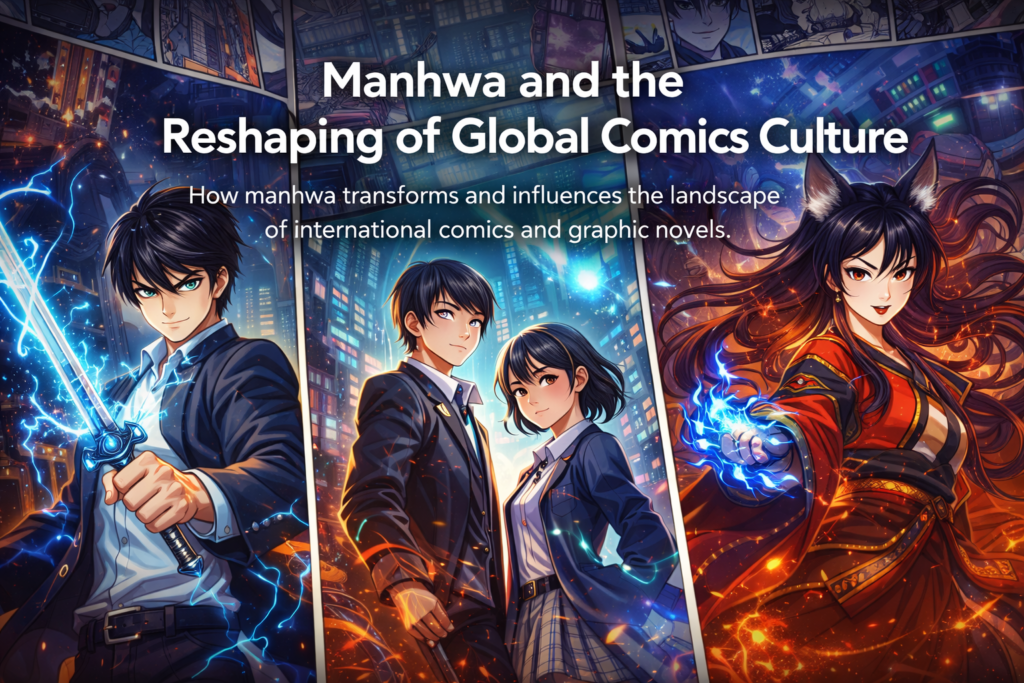
Manhwa and the Reshaping of Global Comics Culture

Manhwa and the Reshaping of Global Comics Culture

Manhwa has emerged as one of the most transformative forces in contemporary visual storytelling. Originating in South Korea, it has evolved far beyond its regional roots, positioning itself as a central pillar of the global comics ecosystem. This rise is not driven by novelty alone, but by a convergence of narrative innovation, digital fluency, and cultural adaptability that few mediums have achieved with such consistency.

At a structural level, manhwa aligns seamlessly with modern consumption habits. Designed predominantly for digital platforms, its vertical-scroll format reimagines how stories are read and perceived. Panels flow downward with deliberate rhythm, replacing rigid page turns with a continuous visual descent. This creates a sense of momentum. A sense of inevitability. Readers are pulled forward, often without realizing how much time has passed.

Narrative Elasticity and Thematic Range

One of manhwa’s defining strengths lies in its narrative elasticity. Genres are not treated as fixed containers …

» Read more

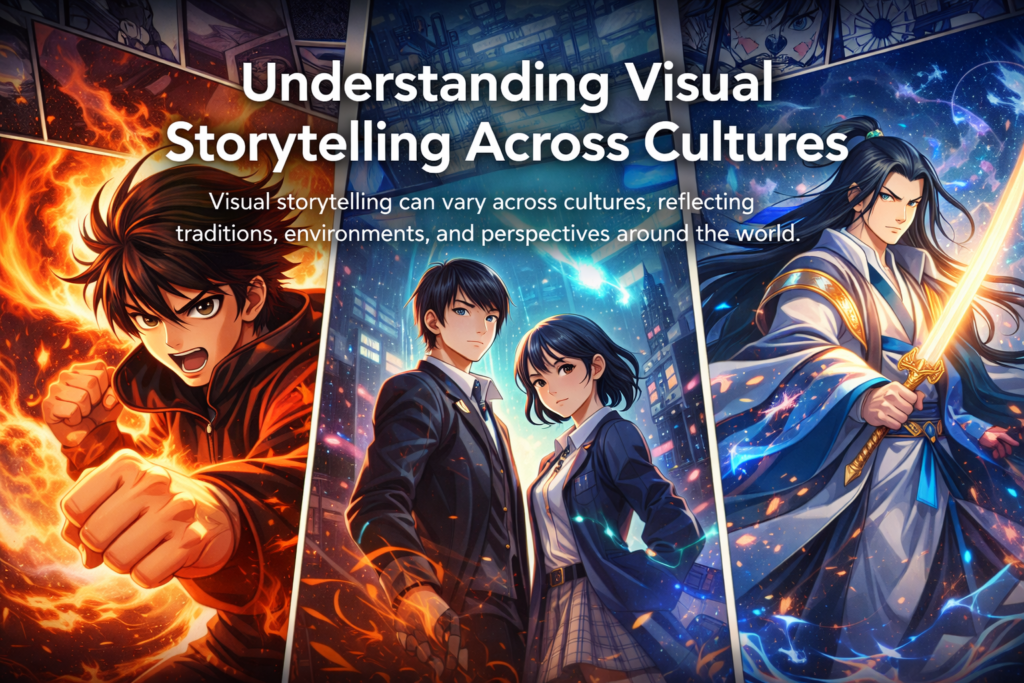
Understanding Visual Storytelling Across Cultures

Comics, Manga, Manhua, and Manhwa

Comics are a universal language. They transcend borders, blend art with narrative, and adapt seamlessly to cultural nuance. Yet not all comics are created in the same tradition. Across the globe, distinct forms have emerged, each shaped by history, audience, and artistic philosophy. Exploring The Difference Between Comics, Manga, Manhua, and Manhwa offers insight into how visual storytelling evolves within different cultural ecosystems.

Though often grouped together, these formats represent unique approaches to pacing, art, and narrative structure.


What Defines a Comic?

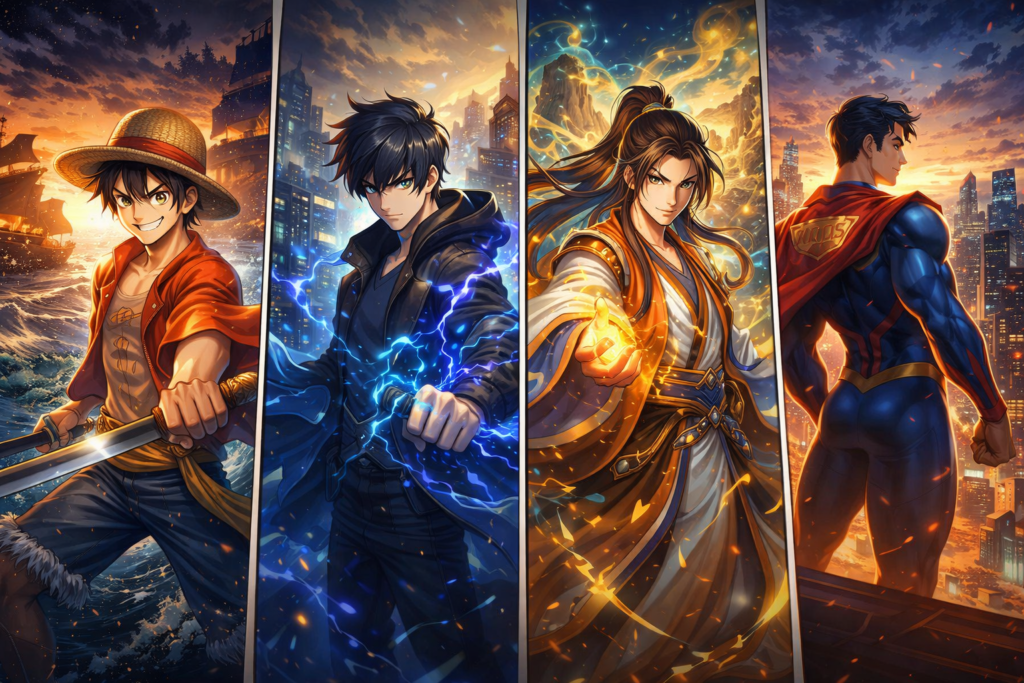
Comic heroes across cultures unite

In its broadest sense, a comic is a sequential art form that uses images arranged in panels to convey a story. Western comics, particularly those originating from the United States and Europe, have historically been published in serialized issues or collected volumes.

Western comics emphasize bold linework, dramatic compositions, and a strong focus on individual heroes. Color plays a central role, often vibrant and symbolic. Narratives frequently revolve …

» Read more
1 2